
How Educators Can Get More Value from Learning Science R&D
With guest Melina Uncapher
Why are the “myths” about how we learn sometimes more powerful than what research has delivered? In this episode of Future Fluent, Jeremy and Betsy interview Dr. Melina Uncapher, a neuroscience researcher and learning science practitioner who has spent her professional life trying to help educators and researchers work together. They plunge into one of the great myths of learning–that we have different “styles” of learning–and then ask the question: Can AI make it possible to weave learning science into the classroom? Betsy puts a challenge to Melina.
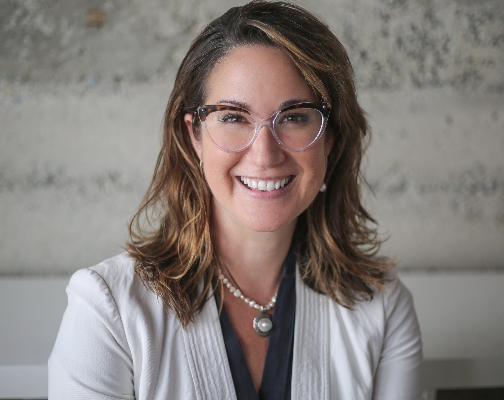
Melina Uncapher
Dr. Melina Uncapher is the Founder and CEO of SETA-ED and a former university professor of educational neuroscience, with labs at Stanford and UC San Francisco. She co-founded AERDF, one of the premier education R&D nonprofits in the US, where she served as Chief of R&D, and brings over two decades of experience spanning scientific research, technology development, data science, and learning system design.
Melina's work sits at the intersection of brain science and education, translating how the hippocampus, memory consolidation, and multimodal learning actually work into practical tools teachers can use today. She's a passionate debunker of enduring myths (yes, including learning styles), and an equally passionate advocate for designing learning environments where every brain can thrive, not just those the system was built to sort to the top.
With AI reshaping classrooms at a pace that outstrips most institutions' ability to respond, Melina is focused on equipping educators with real-time data, early warning systems, and AI-powered tools that make 150 years of learning science finally scalable. Her recent projects include an AI-powered lesson planning app, and Designed for Brilliance: A Science of Learning Coursebook for Educators — a free, open-source resource already taught to over 70,000 teachers globally — and a companion conversational AI agent launching soon that will bring its 19 evidence-based learning principles directly into educators' daily practice.
Her academic publications have been cited over 4,000 times and featured in the New York Times, PBS, and Frontline. She earned her PhD in Neurobiology from UC Irvine and completed postdoctoral fellowships at Stanford.
Further Reading
Here’s where you can explore some of the ideas around learning science and AI that we discussed with Dr. Melina Uncapher.
“Strategic Surprise and the Future of Educational R&D” is an openly available white paper coauthored by Drs. Melina Uncapher and Jeremy Roschelle. The core point: Generative AI is catalyzing rapid shifts in learning practices that far outpace how we have traditionally responded to changes. This paper proposes to re-architect education R&D to be more agile, responsive, and, hopefully to create breakthrough potential.
Designed for Brilliance is a workbook resource for teachers on how to apply learning science by Dr. Uncapher. At the moment, it’s available as a downloadable PDF. Check out Chapter 2: The top 7 Neuromyths, Busted.
On the broad topic of using evidence-based practices in the classroom, take a look at the Accelerate, Transform Scale Hub launched recently by Digital Promise and SRI. Background details here.
Why good ideas stall in education – an opinion piece by Dr. Uncapher and Nat Kendall-Taylor in the 74Million.
AI Snake Oil: What Artificial Intelligence Can Do, What It Can’t and How to Tell the Difference, by computer scientists Arvind Narayanan and Sayash Kapoor, from Princeton University Press, is well-worth a read.
And if it all seems like a bit too much, check out the Pixar movie, Inside Out, which, as Melina says, puts the principles of learning science into animation!
